
What Playground Equipment Is Suitable for Toddlers?
Choosing playground equipment for toddlers? Explore age-appropriate play ideas, indoor and outdoor equipment, safety considerations, and practical tips for creating engaging play spaces at home, nurseries, and childcare centres in Dubai and Saudi Arabia.
1. Understand What Toddlers Need from Playground Equipment
Toddlers learn through movement, exploration, repetition, and interaction with their surroundings. Playground equipment can support these experiences by giving children opportunities to practise simple physical activities and explore different textures, shapes, colours, and movements.
At this stage, the goal is not to provide the biggest or most complicated playground structure. Instead, choose equipment that matches the child’s developmental stage and allows them to engage with activities at a manageable level.
Important developmental areas to consider
- Balance: Activities that encourage children to maintain stability while standing or moving.
- Coordination: Play involving controlled movements of the hands, feet, and body.
- Gross motor skills: Activities such as walking, climbing, crawling, and moving around obstacles.
- Fine motor skills: Toys and activities involving grasping, placing, sorting, and handling objects.
- Sensory exploration: Opportunities to experience different colours, textures, shapes, and materials.
- Imaginative play: Products that encourage pretend play, creativity, and independent exploration.
Parent tip: Choose activities according to your toddler’s current abilities rather than their age alone. Children develop at different rates, so adult supervision and manufacturer age recommendations remain important.
2. Types of Playground Equipment Suitable for Toddler Play Spaces
Toddler play areas can include several types of equipment, depending on the children’s ages, abilities, and the available space. A balanced play environment can combine movement-based activities with quieter sensory and imaginative options.
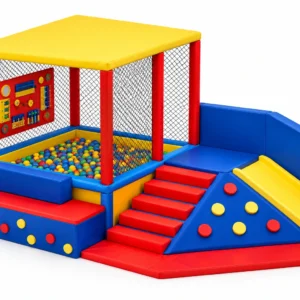
Soft play equipment
Soft play products can provide opportunities for toddlers to explore movement in a play environment designed around their needs. Depending on the product, soft play activities may involve crawling, moving between objects, handling soft shapes, or exploring different arrangements. Check the materials, dimensions, age guidance, and cleaning instructions before use.
Age-appropriate slides
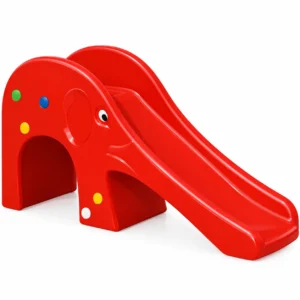
Slides can introduce toddlers to simple climbing and sliding activities when the equipment is specifically designed for their age group. Look for suitable step heights, handholds, platform arrangements, side protection, and a landing area that follows the manufacturer’s requirements.
Balance and coordination equipment
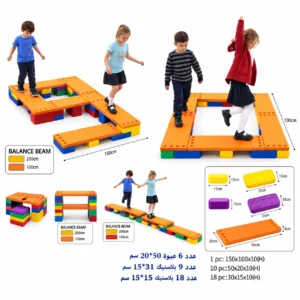
Low-level balance activities can encourage children to practise controlled movement and body coordination. Balance paths and similar products should be selected according to the child’s developmental stage and used on an appropriate surface.
Sensory play equipment
Sensory activities allow children to explore colours, textures, shapes, and materials. Products such as play balls, activity mats, and suitable sensory materials can add variety to a toddler play environment. Small components and loose materials require particular attention because of choking and ingestion risks.
Imaginative and interactive play equipment
Playhouses, pretend-play products, and simple activity toys can encourage creativity and interaction. Select products with age-appropriate dimensions, stable construction, and no accessible small parts or hazardous openings.
3. Choose Equipment According to Age and Development
Not every playground product is suitable for every toddler. A product’s appearance or general children’s marketing does not confirm that it is appropriate for younger users. Review the manufacturer’s recommended age range, intended use, dimensions, and safety instructions before buying.
| Developmental consideration | Possible play activities | What to check |
|---|---|---|
| Early movement | Simple floor-based activities and supervised movement | Stable surfaces, suitable dimensions, and no small parts |
| Developing coordination | Age-appropriate stacking, sorting, and movement games | Component size, material, and recommended age |
| Growing balance skills | Low-level balance and movement activities | Height, stability, grip, and fall area |
| Active exploration | Suitable slides, climbing, and interactive play | Access points, handholds, barriers, and supervision |
Important safety distinction: A product described as children’s playground equipment is not automatically designed for toddlers. Always verify the manufacturer’s age guidance and intended users. Do not use equipment outside its stated age or weight limits.
4. Consider Indoor and Outdoor Playground Equipment
The choice between indoor and outdoor playground equipment depends on the available space, local weather, intended users, and the type of activities you want to provide. Many families and childcare centres benefit from having different play options for different environments.
Indoor toddler play areas
Indoor play spaces can be useful when outdoor temperatures are uncomfortable or when children need a dedicated activity area inside a home, nursery, or childcare centre. Sensory toys, activity mats, suitable play balls, and age-appropriate movement products can provide different types of indoor play.
Outdoor toddler play areas
Outdoor spaces can provide room for movement and supervised activities. Before installing equipment, assess the ground surface, available clearance, shade, drainage, and the manufacturer’s installation requirements. In Dubai and Saudi Arabia, consider direct sunlight and high temperatures when choosing the location and planning outdoor play times.
| Factor | Indoor play area | Outdoor play area |
|---|---|---|
| Environment | Controlled indoor setting | Exposed to outdoor weather conditions |
| Space planning | Room layout and clear indoor pathways | Ground area, clearance, and installation space |
| Equipment options | Activity mats, sensory products, and suitable play toys | Age-appropriate slides, climbing, and movement equipment |
| Maintenance | Cleaning and regular condition checks | Cleaning plus checks for weather-related wear |
5. Explore Toddler Play Equipment and Activity Products at KidVaya
A toddler play area can include different products for sensory exploration, coordination, movement, and imaginative activities. KidVaya offers a range of children’s play products that parents and childcare providers can review when planning an activity space.
The following products represent different types of play activities. They should not all be treated as toddler-specific equipment: check each product’s age recommendations, dimensions, components, and safety instructions before deciding whether it is appropriate for your intended users.

1000-Piece Colorful Kids Play Balls for Ball Pits
These colorful play balls are designed for ball pits, playgrounds, and indoor games. They can add variety to supervised sensory and movement activities.
View Product →
12-Cube Color Matching Activity Mat for Kids Learning
This color-matching activity product provides an option for play involving movement, coordination, creativity, and everyday learning activities.
View Product →
2-in-1 Kids Slide and Climbing Wall Playset
This combination playset brings together sliding and climbing activities. Check its dimensions, access points, age guidance, and installation requirements before use.
View Product →
25kg Colored Play Sand for Creative Kids Sensory Activities
Colored play sand can be used for creative and sensory activities. Use only when the product is confirmed suitable for the child’s age and under close adult supervision.
View Product →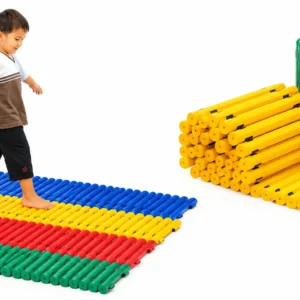
4-Piece Colorful Balance Bridge Path Set for Kids
This activity set provides an option for movement and coordination activities. Check the product’s height, stability, and age guidance before considering it for younger children.
View Product →
4-Piece Colorful Plastic Play Barrier Set with Door
This barrier set can help define an activity area. Review its construction, stability, door design, and intended use. A play barrier should not replace active adult supervision.
View Product →
4-Piece Colorful Plastic Safety Barrier Set for Playgrounds
These colorful barriers are designed for children’s play areas. Review the product’s stability, dimensions, and installation instructions before using them to define a play space.
View Product →
4-Piece Motor Skills Play Set for Indoor Outdoor Kids
This play set offers an activity option focused on movement, coordination, creativity, and active recreation. Check component sizes and age recommendations before use.
View Product →
43-Piece Building Blocks and Toy Car Set for Kids
This building and toy car set encourages hands-on play, creativity, concentration, coordination, and imaginative thinking. Check the size of every component and the manufacturer’s age guidance.
View Product →
8-Piece Closed Racing Hoops Set for Kids Activities
This activity set is designed for children’s group games and movement activities. Review the product dimensions, component design, and age suitability before introducing it into a toddler play area.
View Product →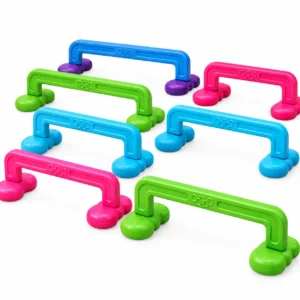
8-Piece Colorful Tunnel Challenge Set for Active Kids
This set offers movement and coordination activities. Before use with toddlers, check tunnel dimensions, material details, stability, and the recommended age range.
View Product →
Adjustable Height Basketball Hoop for Kids Indoor Outdoor Play
This basketball hoop provides an option for indoor or outdoor sports activities. Check the lowest height setting, stability, ball size, and manufacturer’s age recommendations.
View Product →
Adventure Reserve Wooden Playset with Monkey Bars Slide
This wooden playset combines monkey bars, a slide, and a covered tower. It is a larger playground structure; verify its intended age group, dimensions, and installation requirements before considering it for young children.
View Product →
Adventure Ridge Wooden Playset with Climbing Wall Slide
This wooden playset includes a slide, climbing wall, and covered tower. Check the manufacturer’s age guidance, climbing requirements, fall area, and installation specifications before use.
View Product →
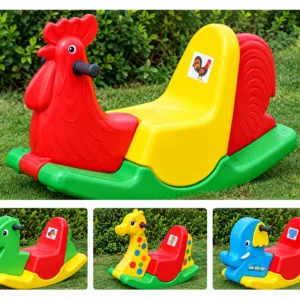
Animal Rocking Toy for Toddlers Indoor Outdoor Play
This animal-themed rocking toy is designed to add movement and imaginative play to children’s activity spaces. Review its recommended age, stability, seat design, and usage instructions.
View Product →
Apple Theme Kids Playhouse for Indoor Outdoor Adventures
This themed playhouse is designed to encourage imaginative play and exploration. Check its dimensions, entry openings, construction, and manufacturer’s age recommendations.
View Product →6. Prioritise Safety When Choosing Toddler Playground Equipment
Safety should guide every playground equipment decision, particularly when the intended users are toddlers. Younger children may not yet recognise hazards or understand how to use equipment correctly. Products should therefore be selected and installed according to their intended age group and manufacturer instructions.
Important safety checks
- Age recommendations: Confirm that the equipment is intended for the child’s age group.
- Small components: Check for detachable parts that may create choking or ingestion risks.
- Edges and surfaces: Look for sharp edges, splinters, exposed fasteners, or damaged surfaces.
- Stability: Make sure the equipment is installed and secured according to its instructions.
- Openings and gaps: Review openings and spaces where a child’s head, fingers, or limbs could become trapped.
- Fall protection: Follow the manufacturer’s requirements for ground surfacing and clearance.
- Supervision: Keep toddlers under active adult supervision during play.
- Maintenance: Inspect equipment regularly for loose parts, damage, and wear.
Remember: A product description or photograph cannot establish that equipment meets every safety requirement. Review the product specifications and instructions, and seek clarification from the manufacturer or supplier when important information is missing.
7. Choose Suitable Materials and Surfaces
Materials and ground surfaces affect the usability and maintenance of toddler play areas. Consider the equipment’s construction, cleaning requirements, exposure to sunlight, and the surface on which children will play.
Equipment materials
Playground products may use plastic, wood, metal, fabric, foam, or combinations of materials. Each product should provide clear information about its materials and intended environment. Check whether the surfaces are suitable for regular handling and whether the product has specific cleaning or maintenance instructions.
Play area flooring
The floor or ground beneath playground equipment should be appropriate for the activities taking place. Hard surfaces may increase the consequences of falls, particularly around climbing and movement equipment. Follow the equipment manufacturer’s recommendations for suitable protective surfacing and installation.
Cleaning and hygiene
In homes, nurseries, and childcare centres, shared play equipment should be cleaned according to its material and care instructions. Sensory products, play balls, mats, and frequently handled toys need regular attention. Do not use cleaning products that may damage the material or leave unsuitable residues.
8. Plan Toddler Play Areas for Dubai and Saudi Arabia
Outdoor play spaces in Dubai and Saudi Arabia need additional consideration because of high temperatures, strong sunlight, and dust. These environmental conditions can affect children’s comfort and the condition of playground equipment.
Manage direct sunlight and heat
Consider a shaded location for outdoor play, while making sure that shade structures do not interfere with equipment clearance or safe use. Check seats, slides, flooring, and other exposed surfaces before children use them because materials can become hot after prolonged sunlight exposure.
Plan outdoor play times carefully
Avoid outdoor play during extreme heat. Families and childcare providers should plan activities around comfortable conditions and follow appropriate precautions for children in hot weather. Indoor play alternatives can be useful when outdoor conditions are unsuitable.
Keep equipment clean
Dust can collect on playground surfaces, activity products, and equipment connections. Establish a cleaning routine that follows the manufacturer’s instructions, and inspect outdoor products for signs of weather-related wear.
Allow enough space
Whether planning a home garden, nursery playground, or childcare activity area, measure the available space before purchasing. Account for equipment dimensions, movement areas, access routes, and any required clearance around the play structure.
9. How to Create a Balanced Toddler Play Area
A useful toddler play area does not need to contain a large number of products. A carefully selected combination of activities can provide opportunities for movement, exploration, creativity, and supervised play.
Consider organising the space into different activity zones, depending on the available room and the ages of the children.
| Activity zone | Possible equipment | Planning consideration |
|---|---|---|
| Sensory play | Suitable sensory materials and play products | Check small parts, hygiene, and age suitability |
| Movement | Age-appropriate movement and coordination activities | Provide suitable floor space and supervision |
| Creative play | Suitable building and imaginative play toys | Check component sizes and intended age group |
| Quiet activity | Age-appropriate activity mats and simple toys | Choose products that suit the child’s abilities |
| Outdoor play | Suitable slides and playground equipment | Check installation, clearance, shade, and ground surface |
Keep pathways clear and avoid overcrowding the play area. Children should have enough room to move between activities without unnecessary obstacles or overlapping equipment use zones.
10. What Parents, Nurseries, and Schools Should Check Before Buying
Parents and childcare providers may have different space and usage requirements, but both should review the product’s safety and suitability before purchasing.
For parents buying equipment for home
- Measure the available indoor or outdoor area.
- Check the manufacturer’s recommended age and weight limits.
- Review product dimensions and installation instructions.
- Consider storage, cleaning, and regular maintenance.
- Choose activities that match the child’s current abilities.
For nurseries and childcare centres
- Consider the number and age range of children using the area.
- Review equipment suitability for the intended group.
- Check cleaning, inspection, and maintenance requirements.
- Plan supervision arrangements and clear activity zones.
- Review applicable local requirements and relevant safety guidance.
For schools and larger play spaces
- Assess the intended users and expected frequency of use.
- Review equipment specifications and installation requirements.
- Plan suitable surfacing, access, and clearance areas.
- Establish a routine for inspections and maintenance.
- Obtain appropriate professional advice for larger installations.
11. Common Mistakes to Avoid When Choosing Toddler Playground Equipment
Selecting playground equipment based only on appearance can lead to unsuitable purchases. Keep these common mistakes in mind when planning a toddler play area.
- Assuming all children’s products are toddler-safe: Always check the recommended age and intended users.
- Ignoring small parts: Detachable components may present choking or ingestion risks.
- Choosing equipment that is too advanced: Climbing structures and larger playsets may not suit younger children.
- Overcrowding the play area: Leave sufficient space for movement and equipment clearance.
- Ignoring installation instructions: Incorrect assembly or placement can affect equipment stability.
- Overlooking outdoor conditions: Sunlight, heat, and dust can affect both comfort and maintenance.
- Relying on equipment instead of supervision: Adult supervision remains essential for toddler play.
Frequently Asked Questions About Toddler Playground Equipment
1. What playground equipment is suitable for toddlers?
Suitable options may include age-appropriate slides, soft play products, sensory toys, simple movement activities, and suitable rocking toys. Always check the manufacturer’s age recommendations, dimensions, and safety instructions before use.
2. What should I look for when buying playground equipment for toddlers?
Review the recommended age, product dimensions, materials, stability, small components, installation requirements, and maintenance instructions. Choose equipment that matches the child’s developmental stage and intended use.
3. Is indoor or outdoor playground equipment better for toddlers?
Both can provide useful play opportunities. Indoor equipment can support activities in a controlled environment, while outdoor equipment provides room for supervised movement and exploration. The right choice depends on available space, weather, and the child’s needs.
4. Are climbing walls and larger slides suitable for toddlers?
Not necessarily. Climbing walls and larger slides may be intended for older children. Check the manufacturer’s age guidance, dimensions, access points, fall area, and safety requirements before considering any such equipment for toddlers.
5. Can play balls be used in toddler play areas?
Play balls may be considered when their size, material, and intended age group are appropriate. Small balls can present choking risks, so check the product’s age recommendations and supervise children during use.
6. How can I make an outdoor toddler play area safer in Dubai and Saudi Arabia?
Consider suitable shade, check surface temperatures before use, keep equipment clean, and follow installation and clearance requirements. Avoid outdoor play during extreme heat and supervise children throughout activities.
7. What type of flooring is suitable beneath toddler playground equipment?
The appropriate surface depends on the equipment and its installation instructions. Follow the manufacturer’s requirements for protective surfacing, fall areas, and ground preparation.
8. How often should toddler playground equipment be inspected?
Follow the manufacturer’s inspection schedule and check equipment regularly according to its use. Look for loose parts, cracks, damaged surfaces, unstable components, and signs of wear.
9. Can the same playground equipment be used at home and in nurseries?
Not always. Equipment intended for home use may have different specifications and usage requirements from products designed for childcare or commercial settings. Check the manufacturer’s intended use and applicable requirements before purchasing.
10. Where can I find children’s playground equipment in Saudi Arabia and Dubai?
You can explore children’s play products through KidVaya’s online store. Review individual product descriptions and specifications to identify options that match your available space and intended users.
Find the Right Playground Equipment with KidVaya
Explore indoor and outdoor play products for homes, schools, and recreational spaces. Compare your options and choose equipment that fits your available area and play requirements.
Shop Through KidVaya →KidVaya is a partner of Amal Toys, which will deliver the products you purchase.